
Spanish Teacher: How to Choose the Right One

Summary
- Great teachers match your goals, adapt to your level, and give frequent feedback
- Online, in‑person, and AI‑guided practice each have different strengths
- A simple checklist (goals, style, availability, feedback) prevents bad fits
- The fastest progress often comes from a hybrid plan: lessons plus daily practice
Practice your way
Get instant speaking and listening drills, anytime.
Table of Contents
Looking for a Spanish teacher? A great teacher can accelerate your progress, but the “best” option depends on your goals, schedule, and learning style. Some learners thrive with structured classes, while others need flexibility or daily practice outside lessons.
This guide helps you choose the right fit and avoid the most common mistakes.
What a Good Spanish Teacher Actually Does
Great teachers don’t just explain grammar. They:
- Adapt lessons to your goals (travel, work, conversation)
- Give specific feedback on your errors
- Create structured practice you can repeat
- Help you speak more, not just memorize more
If lessons feel like lectures, progress slows. If lessons feel like practice, progress accelerates.
Teacher Options
Best For
Pros
Cons
Step One: Define Your Goal
Before you choose a teacher, define the outcome:
- Conversational fluency (B1–B2)
- Travel and survival Spanish
- Workplace Spanish
- Academic or test‑prep
The clearer your goal, the easier it is to find a good fit.
Step Two: Evaluate Teaching Style
Ask these questions:
- Do they focus on speaking or just rules?
- Do they correct errors gently and clearly?
- Do they give homework you can actually repeat?
- Do they adapt the pace based on your progress?
If the teacher can’t explain why a phrase works, they may not be a good match.
Step Three: Check Practical Fit
The best teacher is the one you can actually meet regularly. Consider:
- Time zone and scheduling
- Price and budget
- Lesson length (30, 45, 60 minutes)
- Commitment (weekly or twice weekly)
Consistency matters more than the perfect teacher on paper.
A Simple Lesson Structure That Works
A productive 60‑minute lesson often looks like this:
- 10 min: Warm‑up conversation
- 20 min: Focus on one concept (pattern or skill)
- 20 min: Guided speaking practice
- 10 min: Review and homework plan
If your lessons don’t include speaking practice, you’re missing the most important part.
The Hybrid Plan (Best for Most Learners)
Most people progress fastest with a hybrid plan:
- 1–2 lessons per week with a teacher
- Daily 10–15 minutes of practice between lessons
This keeps feedback and structure while building daily speaking habits.
Common Mistakes When Choosing a Teacher
- Picking someone only because they’re cheap
- Ignoring lesson structure and feedback quality
- Expecting fluency from one lesson a week
- Not practicing between sessions
Your progress depends on what you do between lessons.
How to Decide Quickly
If you want structure and accountability, choose a teacher.
If you want flexibility and daily practice, use a tutor or AI tool.
If you want the fastest progress, combine both.
Start Learning Today
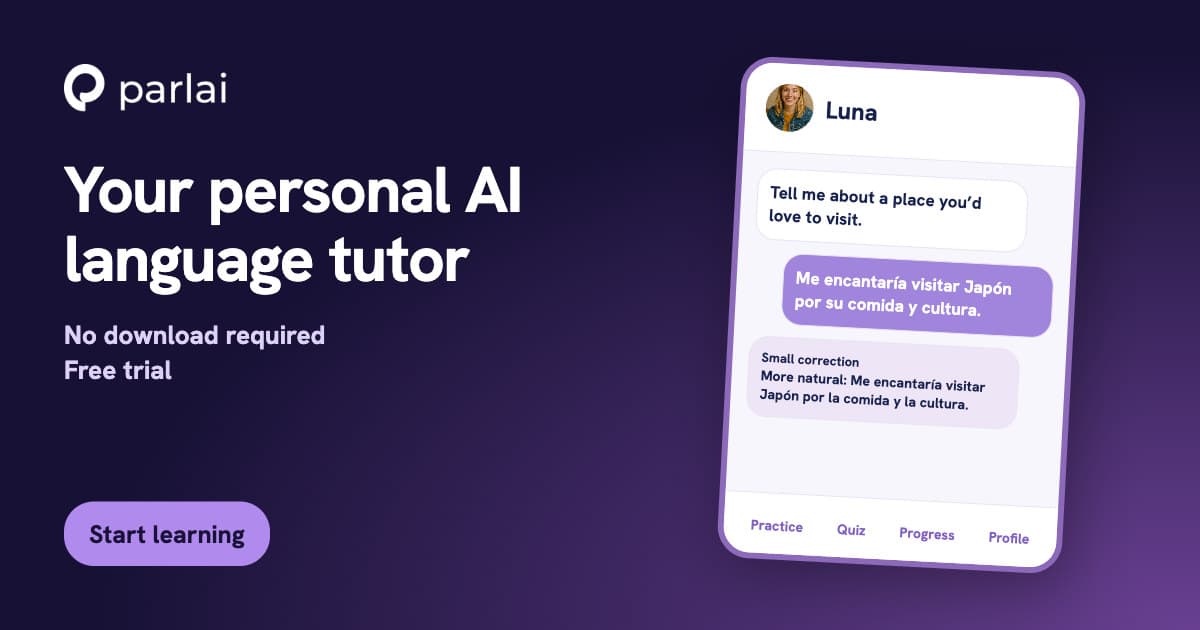
A Spanish teacher can accelerate your progress, but your daily practice is what creates fluency. If you want structured daily practice with feedback between lessons, try Parlai and keep your speaking routine consistent.
Frequently Asked Questions
Online teachers offer flexibility and more options; in‑person teachers offer structure and face‑to‑face interaction. Choose based on your schedule and learning style.
In‑person lessons often range from $30–80/hour, while online tutors commonly range from $15–50/hour. Prices vary by location and experience.
Clear explanations, frequent feedback, structured practice, and lessons that adapt to your goals are the biggest indicators of effectiveness.
A tutor provides personalized guidance; apps provide daily repetition. Many learners progress fastest by combining both.
Most learners benefit from 1–2 lessons per week, plus short daily practice in between.
Not sure where to start?
Find your estimated CEFR level with 12 questions, then see exactly what to improve next.
Related Articles

Ready to Start Your Language Learning Journey?
Join thousands of learners who are already improving their language skills with Parlai.