
English Learning App: What Actually Works
Summary
- Apps work when they're always available, provide instant feedback, adapt to your level, and fit into your existing habits—not when they promise magic results
- The "5 minutes daily" approach works because consistency beats intensity; but it requires actual daily practice, not occasional use
- Good apps prioritize conversation over multiple choice, context over isolated words, and fit into your existing routine without requiring new habits
- Realistic timeline - basic conversations in 1 month, simple fluency in 3 months, confidence in 6 months—with consistent daily practice
Practice your way
Get instant speaking and listening drills, anytime.
Table of Contents
Learning English through an app? It absolutely works, if you know what matters. Most app reviews focus on features and ratings. Here's the honest version focused on what actually builds English skills, without the marketing hype.
Carlos, a 35-year-old engineer from Spain, needed English for his work. He tried multiple apps over two years with minimal progress. Each app promised "fluency fast" but delivered vocabulary lists and grammar exercises. When he finally found an approach that worked, he realized the problem wasn't the apps, it was understanding what actually builds language skills.
Here's what really matters when learning English through an app.
What Apps Do Really Well
When used correctly, apps offer genuine advantages for language learning.
Always available
Practice during micro-breaks; no need to "find time to study"
Instant feedback
Corrections happen immediately, building faster skill development
Conversation focus
Speaking practice, not just multiple choice clicking
Context-based
Phrases and sentences, not isolated vocabulary words
Low friction
Works where you already spend time; no new habits needed
Realistic timeline
Basic conversations (1 month), simple fluency (3 months), confidence (6 months)
Realistic Expectations
Here's what to expect with consistent daily practice (10-15 minutes):
First week: You understand basic phrases and notice improvement in comprehension. You can greet people and introduce yourself.
First month: You can have simple conversations, even with mistakes. You understand the gist of what people say even when you miss some words.
After 3 months: You speak more fluently. You use different tenses correctly. Your vocabulary grows noticeably. Native speakers can understand you easily.
After 6 months: You feel confident in everyday situations. You can discuss topics of interest. You understand most native speech at normal speed.
Important: You won't become perfect through an app alone. But you'll become consistently better, and that's what matters.
How to Use Apps Effectively
Short, Daily Sessions
10-15 minutes daily beats 2 hours on weekends. Your brain needs repeated exposure to consolidate learning. Daily practice compounds; occasional practice doesn't.
Carlos never missed his morning practice, not because he was disciplined, but because it became automatic, like brushing teeth.
Active Practice
Don't just watch videos or read lessons passively. Speak out loud. Write responses. Engage actively. Passive consumption doesn't transfer to active communication.
Meaningful Repetition
Use spaced repetition for phrases you actually need. Don't waste time on vocabulary you'll never use. Focus on what's relevant to your life, work, travel, hobbies.
Personal Relevance
Learn what you really want to say. Generic textbook phrases are less memorable than sentences about your actual interests. Find apps that let you practice topics you care about.
The "I Have No Time" Myth
You scroll through social media daily, that's also 10-15 minutes. The time exists. The question is whether your learning app fits into that time.
A good app fits into your day, not the other way around. If you have to "make time" for study, you'll eventually stop. If study happens naturally during existing moments, it becomes automatic.
Carlos realized he spent 20 minutes daily on social media. Replacing half of that with English practice didn't feel like sacrifice, it felt like upgrade.
Practice with an AI tutor
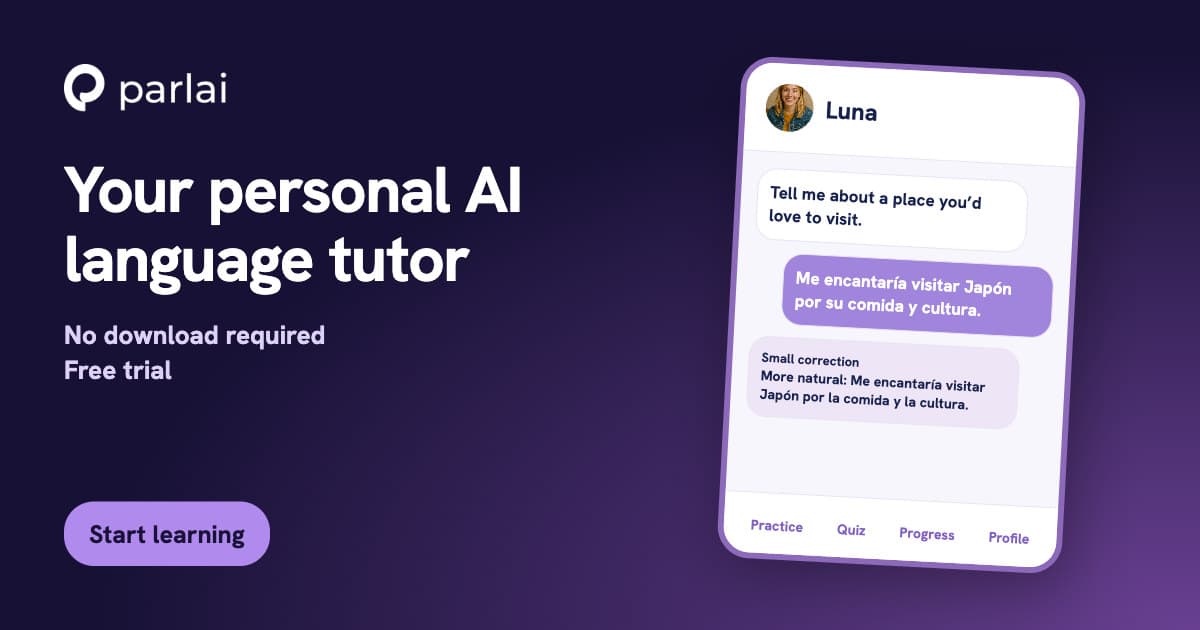
Practice with Luna on your phone or computer. Text, voice messages, Quiz and calls offer different ways to fit language practice into your day.
A simple routine: Choose a regular moment for practice and return to your conversation in Parlai.
Natural format: Chatting in English feels like messaging, not studying. The format matches real communication.
Easy to return to: Open Parlai to continue your conversation. Save an email in Profile and use Sign in to recover your account on another device.
Easy to start: Begin anonymously without a download. Save an email in Profile so you can sign in again and recover your account.
Your Next Step
The perfect app doesn't exist, but the one you'll actually use does. The best English learning app is the one that:
- Fits your schedule
- Gets you speaking
- Keeps you coming back daily
- Lives where you already spend time
Practice 30 languages with Luna. Chat, send voice messages, take quizzes, and make calls with useful feedback.
Remember: Carlos spent two years with minimal progress, then made more improvement in three months once he found an approach that fit his life. The method matters less than the consistency. Start today.
Frequently Asked Questions
Yes, apps can effectively teach English—if you use them consistently and they include speaking practice. Apps that only offer vocabulary drills or grammar exercises won't build conversation skills. Look for apps with real conversation practice and immediate feedback on speaking.
10-15 minutes daily is more effective than 2 hours weekly. Consistency matters more than duration. Your brain consolidates learning between sessions, so daily short practice builds skills faster than occasional long sessions. Find an app that works in the time you actually have.
Four factors - conversation practice (not just multiple choice), context-based learning (not isolated words), constructive mistake handling (not punishment), and integration with your daily life (ideally where you already spend time). An app meeting these criteria will build real English skills.
Most people fail because they choose apps that don't fit their lives. If you have to "find time" to study, you'll eventually stop. Open Parlai on your phone or computer for a short practice session. Choose a regular time and enable reminders in Profile if they help.
With consistent daily practice (10-15 minutes), expect to understand basic conversations after 1 week, have simple conversations (with mistakes) after 1 month, speak more fluently after 3 months, and feel confident in everyday situations after 6 months. You won't become perfect, but you'll become consistently better.
Not sure where to start?
Find your estimated CEFR level with 12 questions, then see exactly what to improve next.
Related Articles
Ready to Start Your Language Learning Journey?
Join thousands of learners who are already improving their language skills with Parlai.